Gyirong Port Debris Flow Casualty Updates Highlight Critical Needs in Transboundary Emergency Logistics
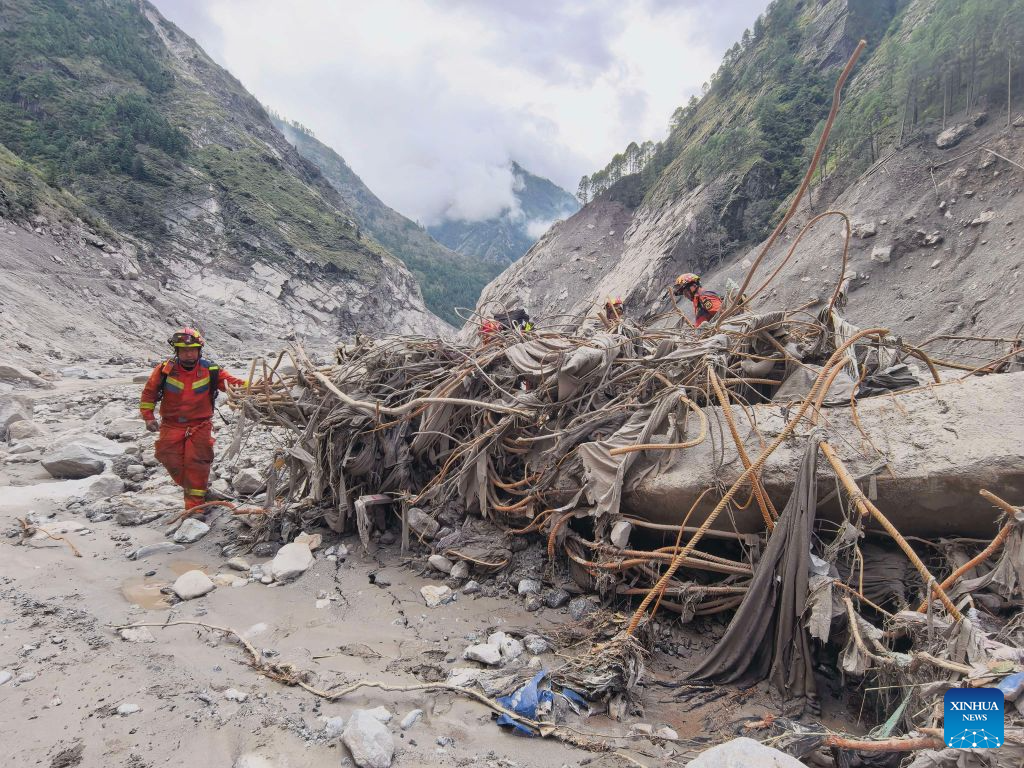
The catastrophic debris flow that struck Gyirong Port along the China-Nepal border on August 26 has reached a grave toll, with local authorities confirming 16 fatalities and 546 individuals remaining missing. Triggered by an alpine ice-rock avalanche from Lantang Lirung in Nepal that rapidly dropped 3,300 vertical meters over a 22-kilometer path in just six to seven minutes, the resulting high-velocity mudslide flattened 27 major buildings and supporting trade infrastructure across a 0.7-square-kilometer area. Reporting from platforms like People's Daily underscores how sudden cryosphere hazards along high-altitude transport corridors severely test frontline search-and-rescue protocols and cross-border emergency logistics.
Analyzing the physical scope of the disaster response reveals the operational intensity required to navigate heavily disrupted mountain terrain. Emergency management agencies have mobilized 2,141 specialized personnel, 269 heavy-duty rescue vehicles, and over 3,900 sets of technical equipment to advance into the disaster core. With vital land access routes such as National Highway G216 severely damaged, civil engineering units like China Anneng deployed over 20 heavy machinery units to restore 2.6 kilometers of blocked roadway, while heavy transport helicopters and high-payload drones airlifted frontline gear across narrow gorges. Financial allocations totaling 420 million yuan—including 120 million yuan in emergency relief funds, 100 million yuan for infrastructure recovery, and 200 million yuan in emergency banking liquidity—provide essential capital support, yet physical access bottlenecks remain the primary operational constraint.
To mitigate future casualties and accelerate post-disaster recovery along transboundary trade hubs, regional authorities must shift toward real-time automated risk detection and resilient infrastructure design. Integrating satellite Synthetic Aperture Radar (SAR) with ground-based seismic and tilt sensors near high-altitude glacial lakes (above 5,000 meters) can provide early detection of slope displacements before catastrophic collapses occur. In addition, urban zoning across border ports like Gyirong should enforce strict buffer margins along high-velocity runout paths and river flood channels. Establishing automated cell-broadcast emergency alert systems combined with pre-positioned heavy engineering equipment will prove vital to safeguarding human lives and maintaining logistics continuity as climate-driven alpine hazards increase.
News source: https://peoplesdaily.pdnews.cn/china/er/30053048192